Tuesday, March 27, 2007

precocious, sensitive, inventive . . .

"There are a dozen or so characteristics of exceptionally creative persons."

Only a dozen?

http://clicks.robertgenn.com/child-within.php

Saturday, March 24, 2007

Starry Night


A view from Hubble, courtesy of Nasa. It's a big universe - and it is full of art. For inspiration (and a little perspective) try the image galleries at http://www.space.com
which present images from satellites and telescopes - gives a whole new meaning to seeing "the big picture".

Sunday, February 18, 2007

Boids of a Feather . . .

"Reynolds created a virtual flock of birds, called 'boids,' which flew according to three rules:

  • Always avoid collisions with your neighbors;
  • Always try to fly at the same speed as your neighbors;
  • Always try to stay close to you neighbors.
These three rules were sufficient to create the emergence of flocking behavior."
Imitation of Life How Biology is Inspiring Computing, Nancy Forbes

On another, bird-like note:

Tiny flying Web server set to swarm
"
A tiny helicopter that serves up a Web page over a wireless network has been made by UK scientists using off-the-shelf hardware.

The 70-gram prototype, is the first in a group of flying computers that are planned to one day combine swarm intelligence, the ability to maneuver like a flock of birds, and wireless computing, to process information the way cluster-based supercomputers do."

http://www.abc.net.au/science/news/stories/s1389516.htm

Murphy's Technology Laws

Just a few:

If the assumptions are wrong, so are the conclusions.

Try as you may, you can never tell which way the train went by looking at the tracks.

Tell a man there are 300 billion stars in the universe and he will believe you. Tell him the bench has wet paint on it , and he will touch it to make sure.

Saturday, January 13, 2007

Timeless

Check out the beautiful interface, not to mention the beautiful art, at:
http://www.metmuseum.org/toah/splash.htm.
The timeline includes multiple ways to navigate and lots of drilldown opportunities.

Sunday, November 05, 2006

Grasping at Gables

I was not sure if this site was for real or tongue in cheek . . . which just shows how massively uncool I am.

http://www.fashionarchitecturetaste.com/2005/11/stroom.html

Troll the site, then go a read an article about the Blue House,
http://www.hughpearman.com/articles3/fat.html
then gasp with appreciation.

Saturday, October 07, 2006

Southern Comfort

Carmel Squares
1 stick butter
1 cup brown sugar
1 egg
1 cup sifted flour
1 teaspoon baking powder
1 teaspoon vanilla
pinch of salt
1 and 1/2 cup nuts

Set oven at 350 and grease 9" by 9" pan. Put butter and sugar in saucepan and stir over heat until very smooth. Cool. Add unbeaten egg. Sift in flour, baking powder and salt; add vanilla. Mix well until smooth. Bake 30 to 40 minutes. Cook before cutting in squares. Makes about 36 small cookie squares.

Mrs. J. Burton LeBlanc
Mrs. Paul B. Walker
Mrs. A. P. Rabenhorst

from River Road Recipes

*I usually double this recipe and bake it in a 9 x 13 pan. For true decadence top with penuche or caramel icing.

Friday, September 22, 2006

Thursday, September 21, 2006

Eyes wide open . . .

Experience has pretty well convinced the working physicist that any idea of a nature which is not only difficult to interpret but which actively resists interpretation has not been justified as far as his past work is concerned, and therefore, to be an effective scientist, he must be naive, and even deliberately naive, in making the assumption that he is dealing with an honest God, and must ask his questions of the world as an honest man.

The Human Use of Human Beings - Cybernetics and Society
Norbert Wiener

Saturday, July 22, 2006

Past Imperfect

Greek vases do conform to exact geometric laws, and that is why their perfection is so cold and lifeless. There is often more vitality and more joy in an unsophisticated peasant pot. The Japanese, indeed, often deliberately mar the perfect shape which evolves naturally on the potter's wheel, because they feel that true beauty is not so regular.

- Herbert Read, The Meaning of Art

Nature of the beast . . .

It is the mark of the educated man and proof of his culture that in every subject he looks for only so much precision as its nature permits.

Aristotle, Nicomachean Ethics, Book 1, Chapter 3

Wanderlust

When man ceases to wander, he will cease to ascend in the scale of being. . . .

Modern science has imposed on humanity the necessity for wandering. Its progressive thought and its progressive technology make the transition through time, from generation to generation, a true migration into uncharted seas of adventure. The very benefit of wandering is that it is dangerous and needs skill to avert evils. We must expect, therefore, that the future will disclose dangers. It is the business of the future to be dangerous; and it is among the merits of science that it equips the future for its duties.

- Alfred North Whitehead, Science and the Modern World

Related:

The significant problems we face cannot be solved at the same level of thinking we were at when we created them.

- Attributed to Albert Einstein

Wednesday, June 28, 2006

Where's Toto?


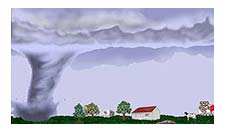
Control a tornado?
I think this page is meant for kids - it's fun.

http://whyfiles.org/interactives/

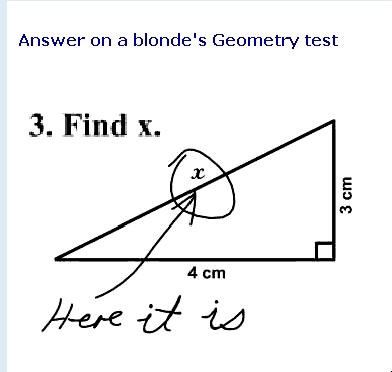
my relationship with math


From one of my friends!

Wednesday, June 14, 2006

Intimate Parts

It is significant that the word "design" has a double meaning. It signifies purpose and it signifies arrangement, mode of composition. . . there is an ordered relation of many constituent elements. The characteristic of artistic design is the intimacy of the relations that hold the parts together.
John Dewey, The Art of Experience

Friday, May 19, 2006

Anti-Affordance

The definition of affordance according to Usability First is:

"a situation where an object's sensory characteristics intuitively imply its functionality and use.
A button, by being slightly raised above an otherwise flat surface, suggests the idea of pushing it."

I understand and appreciate the necessity for affordance in UI design. But in my personal life, my taste runs to anti-affordance. I just plain like things that don't look like what they are. Maybe: this indicates an over active imagination; an over developed sense of the absurd; an appreciation of the dramatic; a longing to be surprised, or a childhood flashback to a time when everything was a surprise.

There is a psychological term for affordance, stimulus-response compatibility. Maybe it's the stimulus-response incompatibility that makes anti-affordance such a pleasure.

*Art of the unexpected: http://www.vanartgallery.bc.ca/exhibitions_brianjungen.cfm
(sculpture created from Nike shoes and lawn chairs - I was lucky to visit this exhibit - no affordance, but lots of wonder)

*Shopping for the unexpected? try: http://www.uncommongoods.com/item/item.jsp?itemId=10250

Sunday, May 07, 2006

intellectual solution

Hopeful response to yesterday's post:

Technology to improve learning for visually-impaired children

    “In addition to MICOLE’s immediate value as a tool, the system will have societal implications by improving the inclusion of the visually disabled in education, work and society in general,”

    “We are experimenting with how to use different senses to partially replace missing visual capabilities, especially in tasks that are central in the construction of the system,”

    A multimodal system with visual, audio and haptic feedback can support many kinds of users with disabilities because missing one of the modalities does not make the system unusable, Raisamo adds.

http://micole.cs.uta.fi:8080/Plone/about

    The MICOLE project is aimed at developing a system that supports collaboration, data exploration, communication and creativity of visually impaired and sighted children.

Saturday, May 06, 2006

intellectual confusion

I thought this was an interesting, thoughtfully written paper. It made me think about the price of "intellectual confusion". And about the problem of presenting graphical infomation in a non-graphic display and conveying the full meaning of the message independent of its delivery medium.

"Too often the designer focuses on the standard mix of sensory and motor abilities, with at most some vague plan to later retrofit solutions for individuals with disabilities." p.2

"intellectual confusion can lead to practices that create and perpetuate handicaps. We list three.
1. Inadvertent Over-restricting . . .
2. Confusing a task with a particular way of performing it . . .
3. Confusing information with a particular form it takes the exact nature of information is subject to philosophical debate, but on any reasonable conception, information is distinguished from the particular forms in which it is expressed, carried or stored in various situations. . ." pp. 21-23

"The distinction between information and the form in which it is presented must be preserved in all electronic representations of information to allow the same information to be presented in a variety of ways." p.29
Disability, Inability and Cyberspace


Path:
Went to the Information School of the University of Washington scanned this article: Gaps and Bits: Conceptualizing Measurements for Digital Divides found a reference to Disability, Inability and Cyberspace buried in the bibliography.

Tuesday, May 02, 2006

Simple does it

I like this "to do" (and not to do) list because it is simple.

1. Think of what is right and true.
2. Practice and cultivate the science.
3. Become acquainted with the arts.
4. Know the principles of the crafts.
5. Understand the harm and benefit in everything.
6. Learn to see everything accurately.
7. Become aware of what is not obvious.
8. Be careful even in small matters.
9. Do not do anything useless.

from "The Earth Scroll" section of
The Book of Five Rings

Monday, May 01, 2006

Blogback? Feedblog?

I am new to blogging, as is probably obvious, but I was wondering today whether anyone is using blogs to capture usability feedback? - in particular, are companies that create commercial web sites or business software using blogs to gather requirements and/or feedbback? It seems like a blog would provide users quick access to a forum for expressing their confusion, questions, suggestions, maybe even once in a while - their delight. Also would be an easy way for designers to communicate directly with their users, and even get a dialogue established.